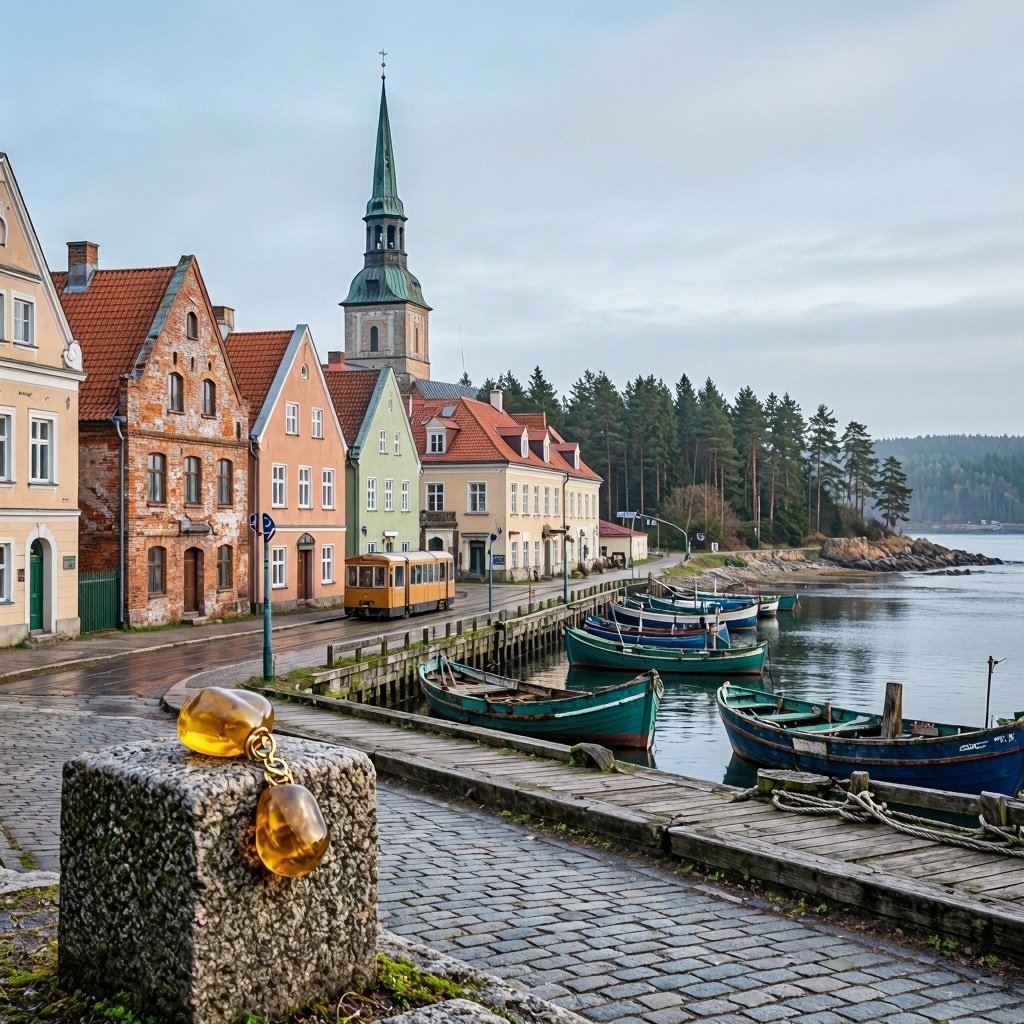
While Western Europe is taking a tougher stance, Estonia, Latvia, and Lithuania are quietly redefining the standards for iGaming. Discover the key factors behind this rapidly growing hub.
Part 1: Three Nations, Three Frameworks – Navigating Baltic Regulatory Divergence
To the untrained eye, the Baltic states are often lumped together as a single, homogenous economic bloc. However, for iGaming operators and compliance experts, Estonia, Latvia, and Lithuania present three distinct regulatory philosophies. With a combined regional Gross Gaming Revenue (GGR) estimated at approximately €450 million, understanding these nuances is critical to evaluating how local oversight shapes market entry and operational sustainability.
+————————————————————————————+
| BALTIC REGULATORY & ECONOMIC LANDSCAPE AT A GLANCE |
+————————— +————————— +—————————-+
| Estonia (EMTA) | Latvia (IAUI) | Lithuania (LPT / VPT) |
+————————— +————————– +—————————-+
| • 2026 Online Tax: 5.5% | • 2025 Market: ~€300M GGR | • H1 2026 GGR: €153.6M |
| • Open international hub | • Online share: 57% | • Online dominance: 78% |
| • B2C/B2B Split: €220M/80M | • Aggressive ISP blocking | • Total marketing bans |
+—————————+ —————————+ —————————-+
Estonia: The Blueprint for Digital-First Regulation
Regulated by the Estonian Tax and Customs Board (EMTA), Estonia has long been the gold standard for regulatory agility. Driven by a domestic GGR that has surpassed €300 million (split between €220 million B2C and €80 million B2B), the country leverages its world-renowned digital infrastructure—anchored by the e-Residency program—the country offers a highly transparent, two-tier licensing system (activity license followed by an operating permit).
Following the implementation of the state budget, Estonia codified its online gambling tax rate at 5.5% of GGR. The framework is inherently business-friendly but uncompromising on compliance. Major local holdings have proven the financial viability of this model; top-tier Estonian-based groups reported revenues of €45 million, posting a 6% year-on-year growth. The local regulator focuses on technological automation for auditing, minimizing administrative friction while maintaining strict anti-money laundering (AML) controls.
Lithuania: The Stronghold of Consumer Protection
In stark contrast to Estonia’s flexible approach, the Lithuanian Gaming Control Authority (LPT / VPT) enforces one of the most stringent regulatory regimes in Europe. Despite an absolute ban on gambling promotion and bonuses introduced in 2021—which eliminated traditional advertising, free spins, and promotional incentives—Lithuania remains the fastest-growing market in the region, with its total GGR reaching €274.1 million.
Official data reveals that Lithuania’s general GGR surged by 16.81% year-on-year to reach €153.6 million during the first half of the year. The digital transformation here is nearly absolute: the remote segment accounts for 78% of the total market, amassing a combined GGR of €119.9 million in just six months (a 25% YoY increase).
Furthermore, Lithuania maintains a strict requirement for remote operators to establish a physical connection to the country, often tying digital licenses to local brick-and-mortar operations or specific capital requirements. For an expert assessing this market, Lithuania represents a consolidated landscape where digital efficiency drastically outperforms land-based venues, which saw a concurrent 5% downturn.
Latvia: The High-Barrier, High-Yield Mature Market
Regulated by the Lotteries and Gambling Supervision Inspection (IAUI), Latvia sits at the intersection of maturity and strict enforcement. The total Latvian gambling market stabilized at €299.57 million, but its internal structure underwent a major shift, with the online segment officially capturing 57% of total GGR. Over the past few years, the Latvian government has systematically increased gambling taxes and tightened player exclusion laws through the single registries system.
Latvia distinguishes itself through its aggressive stance against the offshore market, historically plagued by unauthorized operators. By collaborating closely with financial institutions and ISPs to block thousands of illegal domains and financial transactions, the IAUI has forced a massive channelization shift. For legitimate operators, this aggressive protectionism reduces black-market competition, creating a highly stable ecosystem for established players who can absorb increased local gambling taxes.
Part 2: Tech Infrastructure and Fintech Synergies – The Real Engine of Baltic iGaming
Beyond the legislative frameworks, the true competitive advantage of the Baltic region lies in its infrastructure. Estonia, Latvia, and Lithuania have evolved from regional tech adopters into global powerhouses for iGaming research and development (R&D), software provisioning, and financial technology integration.
+————————————————————————————+
| THE BALTIC TECH & FINTECH TRIPLE THREAT |
+—————————+ ————————— +—————————-+
| Tech Talent Pool | Fintech Infrastructure | Mobile-First Consumer Base
+————————— ————————— +—————————-+
| High density of developers | Vilnius as a PSD2 hub; | Near-total smartphone |
| and iGaming R&D hubs. | instant open banking. | penetration, low latency. |
+—————————+ ————————— +—————————-+
The R&D Hub of Europe: Talent Density and Legacy
The Baltics boast some of the highest numbers of startups per capita in the world, a legacy sparked by early tech successes like Skype in Estonia. For the iGaming sector, this has translated into a premier ecosystem for business-to-business (B2B) providers.
Major international live casino giants, software developers, and platform providers maintain massive operational hubs and engineering centers in Riga, Vilnius, and Tallinn. The region offers a rare combination: highly skilled software engineers, data scientists, and product managers who possess deep, specialized knowledge of gambling systems compliance, security, and game mathematics.
The Fintech Convergence: Open Banking and Instant Payments
Operational efficiency in online gambling lives and dies by the payment funnel. Here, the Baltics offer a distinct infrastructural edge, heavily driven by Lithuania’s emergence as the leading Electronic Money Institution (EMI) hub in the European Union.
With mobile gaming revenues now accounting for over 50% of the digital share across the region (surpassing €153 million in Estonia alone), Baltic-based Fintech companies have pioneered payment solutions tailored specifically for high-velocity transaction industries:
• Instant Deposits & Payouts: Open banking APIs (PSD2) allow for seamless bank-to-wallet transactions that happen in seconds, completely bypassing traditional, friction-heavy credit card processing.
• Frictionless Verification: These payment ecosystems inherently integrate automated KYC and AML checks, verifying user identities directly through local bank IDs.
A Hyper-Connected, Mobile-First Consumer Base
On the consumer side, the Baltic domestic markets serve as ideal testing grounds for next-generation product features due to user demographics.
• Connectivity: The region enjoys world-leading fiber-optic networks and extensive 5G coverage, driving down latency to near zero—a technical prerequisite for modern live dealer games and real-time sports betting.
• UX Expectations: Baltic players are digital natives. They expect highly intuitive mobile interfaces, gamified loyalty programs, and frictionless biometric authentication (FaceID/Fingerprint). Operators who successfully optimize their products for the demanding Baltic consumer find themselves well-equipped to scale globally.
Part 3: Market Consolidation, AI, and Player Protection – The Next Frontier
As the Baltic iGaming landscape matures, operators face a dual challenge: navigating increased operational costs while meeting heightened societal and regulatory expectations. The coming years will be defined by how the industry leverages emerging technologies to balance profitability with corporate social responsibility (CSR).
+————————————————————————————+
| THE NEXT BALTIC IGAMING FRONTIER |
+————————— +————————— +—————————-+
| M&A & Consolidation | AI-Driven Compliance | The “Safe Play” Mandate |
+————————— +————————— +—————————-+
| Rising taxes and marketing | Machine learning models | Interconnected national |
| bans price out smaller | flag problematic player | exclusion databases like |
| localized operators. | behavior in real-time. | Lithuania’s registries. |
+————————— +————————— +—————————-+
The Consolidation Squeeze: Survival of the Fittest
The era of easy growth for small, highly localized operators in the Baltics is drawing to a close. A combination of escalating gaming taxes, strict anti-offshore enforcement, and aggressive marketing restrictions has heavily altered the unit economics of the region. In Lithuania, while the booming digital sector drove state gambling tax receipts up by 11.4% to €46.43 million in a single half-year, it has simultaneously priced out smaller entities.
This high-pressure environment is driving a massive wave of Mergers and Acquisitions (M&A). Tier-1 international operators are systematically acquiring established local brands to gain immediate market share and local operational expertise. Meanwhile, smaller entities that cannot absorb the compliance overhead are either consolidating or exiting the market, leaving a highly professionalized, well-capitalized playing field.
Proactive Responsible Gambling: The AI Shift
With regulatory bodies heavily focused on player protection, Baltic operators are moving away from reactive compliance to proactive, tech-driven intervention. Casino products dominate the Baltic online ecosystem, accounting for 72% of digital revenue in Estonia and 63% in Latvia. Because slots generate the highest velocity of play, integrating predictive algorithms has become a legal and operational mandate.
The region’s software engineers are at the forefront of integrating Artificial Intelligence (AI) and Machine Learning (ML) into CRM and risk-management systems. Rather than waiting for a player to request self-exclusion, modern Baltic platforms use Machine Learning models to analyze betting patterns, transaction velocities, and session lengths in real-time. If a player exhibits signs of chasing losses or erratic behavior, the system automatically triggers micro-interventions, creating an airtight safety net that satisfies political demands for consumer protection while offering legitimate operators a clear, legally secure framework.
Navigating National Exclusion Databases
A cornerstone of the Baltic approach to player welfare is the implementation of robust, government-backed self-exclusion registries (such as Lithuania’s Nevešk or Estonia’s equivalent systems). These centralized databases ensure that once a player self-excludes, they are automatically blocked across all licensed remote and land-based operators nationwide.
For compliance experts, the seamless API integration between private operators and these state-run registries is a testament to the region’s advanced public-private tech infrastructure. It creates an airtight safety net that satisfies political demands for consumer protection while offering legitimate operators a clear, legally secure framework within which to operate.
Conclusion: The Baltic Blueprint for Modern iGaming
The Baltic states have successfully transitioned from emerging local markets into a sophisticated, highly influential hub for the global iGaming ecosystem. By combining Estonia’s digital-first regulatory agility, Lithuania’s uncompromising consumer protection standards, and Latvia’s robust anti-offshore enforcement, the region offers a masterclass in regulatory maturity.
When paired with a world-class Fintech infrastructure and an elite tech talent pool, the Baltics demonstrate that strict regulation and high technical expectations do not stifle innovation. Instead, they force it to evolve. For international operators and B2B providers, the Baltic region is no longer just a destination for market expansion—it is the testing ground for the future of sustainable, tech-driven gaming.
What are your thoughts on the Baltic iGaming trajectory?
As Western European markets face their own regulatory overhauls, do you believe the Baltic model of strict marketing bans paired with high-velocity Fintech integration is the right blueprint for the rest of Europe?
Let’s discuss in the comments below. If you found this analysis valuable, feel free to Like and Share it with your network.
